


















Words by Marwan Lockman
13 Feb 2026
Why Contemporary Architecture Must Rebuild Our Sense of Community
In the latest Design Council Digest, Marwan Lockman of S-L Architects explores how modern cities are expanding faster than our sense of belonging, and argues that contemporary architecture must rediscover its role in creating places where human connection can thrive.

Credit: S‑L Architects
Marwan Lockman of S-L Architects
Last year it was announced that a new town in the UK is to be built in South Gloucestershire that will create 30,000 jobs and house 24,000 people. Much consideration will have been put into the town planning of this project but it’s interesting to consider that in a world of cities, towns and villages expanding faster than the social bonds that hold us together, how do we create the right conditions to build community as well as design for planet? Jane Jacobs in The Death and Life of Great American Cities once said; "Cities have the capability of providing something for everybody, only because, and only when, they are created by everybody."
The UN and WHO recently drew a direct line between weakened social ties and higher mortality, estimating that loneliness contributes to more than 871,000 deaths each year. In a world increasingly shaped by digital interaction and isolated living, the built environment has never mattered more to help negate what the media has coined as a ‘loneliness epidemic’ or ‘an age of loneliness’.
Architecture has always been a social discipline at heart. For centuries, buildings and public spaces were designed not just to shelter people, but to bring them together. Yet many modern cities have drifted from that purpose, favouring efficiency, aesthetics, and speed over connection, comfort, and care. If we want stronger, more resilient societies, we must revisit the principles embedded in our traditional architecture both in the UK and around the world. We need to recognise how they can guide the future.
Across the Arab world for instance (which is where I was schooled, and where I began my Architectural education, before coming to the UK to continue), what many refer to as “traditional aesthetics”; wind towers, shaded courtyards, narrow walkways, or the use of natural materials were in fact intelligent responses to climate, culture, and community life. These were not stylistic choices; they were human ones. They shaped how people met, gathered, cooled down, and socialised every day. Mosques, majlis areas, markets, and open squares were intentionally positioned to act as social anchors, nurturing interaction long before we spoke about placemaking in today’s terms.
Hasan Fathy a renowned Egyptian architect’s view was: "Build your architecture from what is beneath your feet, to create beautiful, sustainable, and culturally relevant spaces that respect both people and place, rather than imposing foreign, mass-produced models. Any architect who makes a solar furnace of his building and compensates for this by installing a huge cooling machine is approaching the problem inappropriately and we can measure the inappropriateness of his attempted solution by the excess number of kilocalories he uselessly introduces into the building.”
Vernacular architecture does not only serve community through spatial design, but through responsible principles that meet sustainability goals, at a time when said sustainability was not part of a narrative but a product of function over form. Principles such as, economy of means and materials, indigenous craftsmanship, engineering ingenuity and climatic response. The wind towers, the lime washed walls, coral rock strip footings and many other features, working in tandem to counteract the harsh climates of high heat and humidity in the desert nations.

Credit: Viviana Nysaether
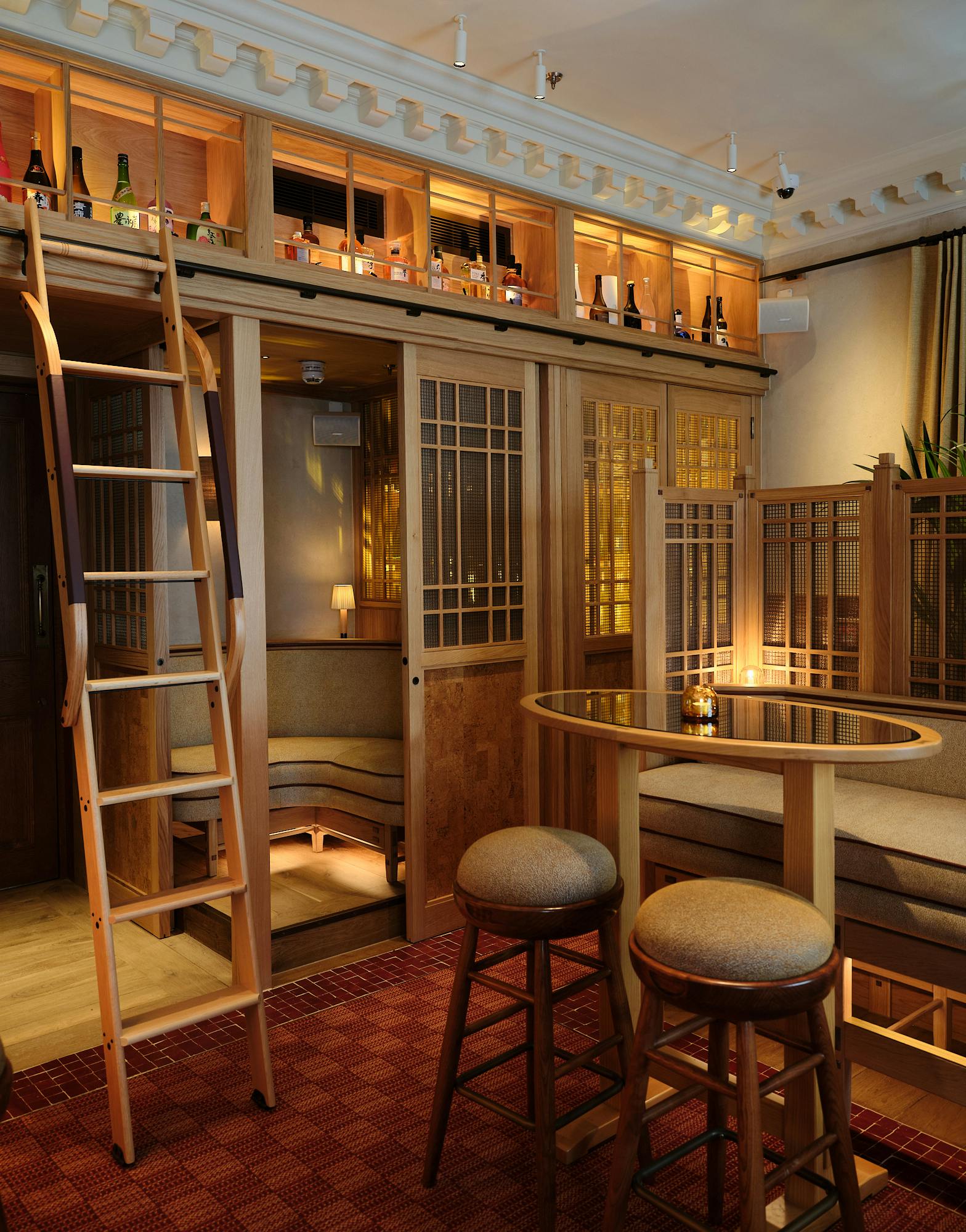
A Tea House in Japan

Credit: Rio Harianto
A Tatami in Japan
The Middle East is not alone in turning to its roots for direction. Around the world, countries are rediscovering the value of traditional design in building stronger communities.
In Japan, architects often incorporate engawa, the traditional semi-outdoor veranda that blurs the line between inside and outside – to gently encourage neighbourly connection and mindful living. Tadao Ando, a regarded Japanese architect commented on this; "I believe that architecture is fundamentally a public space where people can gather and communicate, think about the history, think about the lives of human beings, or the world".

Courtyards in Mexico
Image credits (l-r): Reza Madani / Hugo Herrera / Edgar Mosqueda Camacho
In Mexico, the revival of courtyard housing and locally sourced materials has shaped modern projects that feel both familiar and future-ready.
In Scandinavia, the reinterpretation of historic wooden settlements into contemporary, community-first neighbourhoods shows how heritage can inform some of the world’s most sustainable design. These examples show that meaningful innovation rarely comes from discarding the past, but from engaging with it.
Heritage holds a powerful blueprint for addressing our modern challenges. By designing environments that prioritise human presence and participation, architects can help rebuild the everyday rhythms of community life and design for a better planet.
For architecture to mend the social fabric, we must create spaces where people naturally cross paths. Public plazas, communal gardens, and generous courtyards offer places where people can slow down, meet, and reconnect. In busy global cities from New York to London; these spaces are cherished precisely because they give people a moment to breathe and a sense of belonging.
Human-centric design is essential. When architects prioritise comfort, accessibility, and inclusivity, they create environments that feel welcoming rather than imposing. People linger longer, participate more, and develop a genuine connection with the spaces around them. When buildings respond to human behaviour instead of demanding that people adapt to rigid forms, cities become more intuitive, humane, and alive.

Credit: S‑L Architects
Bahrain’s Al Dana Amphitheatre
Architecture also acts as a bridge between identity and innovation. Cultural spaces, museums, amphitheatres, community centres are not just venues; they are shared platforms where heritage is expressed, preserved, and reinvented. When these spaces reflect local culture, they strengthen people’s sense of belonging and inspire meaningful exchange.
I saw the impact of this approach first-hand when designing Bahrain’s Al Dana Amphitheatre, a project rooted in the idea that bringing people together through music is a powerful expression of heritage. Blending with its surroundings, Al Dana was shaped by its climate and topography and built into the natural landscape, celebrating Bahrain’s environment and cultural identity. Inspired by traditional Bahraini courtyards, it has become the largest courtyard in the country, acting as a gathering place where people come together to share experiences and celebrate culture.

Credit: S‑L Architects

Credit: S‑L Architects
Additionally, the principles of vernacular responsibility are echoed at Al Dana in the use of recyclables, reclaiming the limestone quarried on site for gabion walls and claddings, the use of sheet piles as claddings for the dual purpose of acoustic enhancement and durability, re purposed shipping containers atop the balconies for corporate boxes, restraint in the use of tiling where possible in favour of the fair face concrete finish, even harvesting of rain water through the drainage systems running beneath the stands throughout the amphitheater and stored in a 300 year rainfall tank behind the stage for irrigation use, all these efforts and more culminate in the nuance of the space subconsciously enhancing the quality of user experience and community.
As our cities continue to grow and technology becomes ever more woven into daily life, architects face a profound responsibility: to protect culture, encourage interaction, and support emotional wellbeing as well as considering long-term the impact of their designs on the planet.
Contemporary architecture should not overwrite heritage but reinterpret it, ensuring that what we build is rooted in both innovation and identity. By looking to tradition, we can shape a future in which people feel connected, supported, and part of something larger than themselves. And in doing so, we can help ensure that the cities of tomorrow are not only efficient and modern, but deeply human. Hasan Fathy, architect, once said: “If you want to design for the people, you have to go and understand their way of life". Life, being the key word, as life can only be measured by the efficacy of strength and health of connection and of course health of the planet we live in. Connection has the power to supersede any segregation, or secularist division and bring understanding and fellowship, while promoting the nature of being and building a better world.
Marwan Lockman, S-L Architects, is the Architect behind Bahrain’s Al Dana Amphitheatre, was recently nominated for a RIBA Middle East Award and is a graduate of the University of East London, Portsmouth University and University of Bahrain, Architecture courses.
Cover Image of Al Dana Amphitheatre by S‑L Architects
- https://s-larchitects.com - S-L Architects